Want to explore the cloud without spending a dime? The AWS Free Tier is your golden ticket to experimenting with Amazon’s powerful cloud services—risk-free and packed with value.

What Is the AWS Free Tier?

The AWS Free Tier is a program offered by Amazon Web Services (AWS) that allows new users to access a wide range of cloud services at no cost for a specified period. It’s designed to help individuals, startups, and developers get hands-on experience with AWS without incurring charges during the initial learning and testing phase.
Core Purpose of the Free Tier
The primary goal of the AWS Free Tier is to lower the barrier to entry for cloud computing. By offering free access to essential services, AWS enables users to learn, build, and test applications without financial risk. This is especially beneficial for students, hobbyists, and small businesses exploring cloud infrastructure.
- Encourages innovation and experimentation
- Provides real-world experience with enterprise-grade tools
- Supports learning and certification preparation
Types of Free Tier Offers
AWS structures its Free Tier into two main categories: the 12-Month Free Tier and the Always Free tier. Understanding the difference is crucial for maximizing your benefits.
The 12-Month Free Tier includes services that are free for the first 12 months after you create your AWS account. After this period, standard pricing applies unless you cancel or stay within the limits of the Always Free offerings.
On the other hand, the Always Free tier includes select services that remain free indefinitely, as long as you stay within specified usage limits. These are ideal for low-traffic websites, development environments, or personal projects.
“The AWS Free Tier is one of the most generous entry-level offers in the cloud industry, giving users real access to production-grade infrastructure.” — TechRadar Cloud Analysis, 2023
How to Sign Up for the AWS Free Tier
Getting started with the AWS Free Tier is simple and takes only a few minutes. Whether you’re a developer, student, or entrepreneur, signing up gives you immediate access to a robust cloud environment.
Step-by-Step Registration Process
1. Visit the official AWS Free Tier page and click on “Create an AWS Account.”
2. Enter your email address and create a password.
3. Provide your personal information, including name, address, and phone number.
4. Enter a valid credit card. Yes, a credit card is required, but you won’t be charged unless you exceed free tier limits or use paid services.
5. Verify your identity via a phone call or text message.
6. Choose a support plan (the Basic plan is free and sufficient for most users).
7. Once your account is active, you can immediately start using eligible free tier services.
It’s important to note that AWS performs a soft credit check to prevent fraud, but no charges will be applied as long as you stay within the free usage limits.
Eligibility Criteria
The AWS Free Tier is available to any individual or organization creating a new AWS account. However, there are a few key conditions:
- You must be a first-time AWS user.
- The 12-month clock starts the moment your account is created.
- Some services may have regional availability restrictions.
- Organizations using AWS Organizations may have limitations on free tier access across member accounts.
Students can also benefit from additional programs like AWS Educate, which complements the Free Tier with extra credits and learning resources.
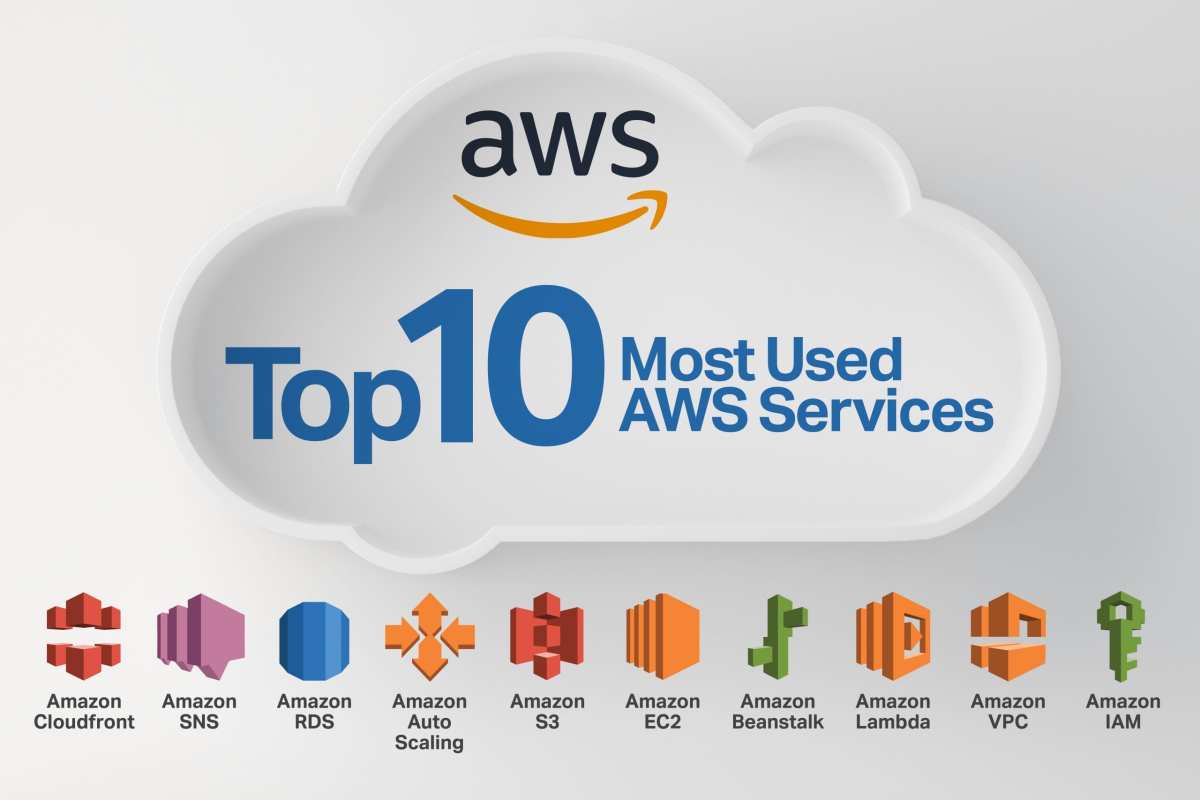
Top 10 AWS Free Tier Services You Should Know
The AWS Free Tier includes over 100 services, but some are more commonly used than others. Here’s a breakdown of the most valuable ones for beginners and developers.
Amazon EC2 (Elastic Compute Cloud)
Amazon EC2 is one of the most popular services in the AWS ecosystem. Under the Free Tier, you get 750 hours per month of Linux or Windows t2.micro or t3.micro instances for the first 12 months.
This is enough to run a small web server continuously (24/7) without paying a cent. It’s perfect for hosting a personal blog, a development environment, or a lightweight application.
However, be cautious: if you launch larger instance types or run multiple instances, you may incur charges. Always monitor your usage through AWS Cost Explorer.
Amazon S3 (Simple Storage Service)
Amazon S3 offers 5 GB of standard storage for free each month, indefinitely. This is part of the Always Free tier, making it a great option for storing backups, static website assets, or small datasets.
In addition to storage, you also get 20,000 Get Requests and 2,000 Put Requests per month at no cost. While this may seem limited, it’s more than enough for personal projects or low-traffic sites.
For developers, S3 is essential for hosting static websites, serving images, or integrating with other AWS services like Lambda and CloudFront.
Amazon RDS (Relational Database Service)
Amazon RDS allows you to run managed databases in the cloud. The Free Tier includes 750 hours per month of a db.t3.micro instance for MySQL, PostgreSQL, Oracle, or SQL Server for the first 12 months.
You also get 20 GB of General Purpose (SSD) storage and 20 million I/Os per month. This is ideal for small applications, development databases, or learning SQL in a real-world environment.
One key benefit of RDS is automated backups and patching, reducing administrative overhead. Just remember to delete unused instances to avoid charges after the free period ends.
Understanding the 12-Month vs. Always Free Tier
Not all free services are created equal. AWS clearly distinguishes between time-limited and perpetual free offerings, and understanding this difference is crucial for cost management.
12-Month Free Tier Explained
The 12-Month Free Tier includes services that are free only for the first year after account creation. Once this period expires, standard pricing applies unless you manually stop using the service or stay within Always Free limits.
Key services in this category include:
- Amazon EC2 (750 hrs/month)
- Amazon RDS (750 hrs/month)
- AWS Lambda (1M free requests/month for 12 months)
- Amazon DynamoDB (25 GB storage, 25 units of read/write capacity)
- Amazon Elastic Load Balancing (15 LCUs and 15 GB data processing)
These services are designed to give you full access to AWS’s compute, storage, and database capabilities during your first year of exploration.
Always Free Tier Services
The Always Free tier includes services that remain free indefinitely, as long as you stay within usage limits. These are perfect for long-term personal projects or lightweight applications.
Examples include:
- Amazon S3 (5 GB storage)
- AWS Lambda (1M requests/month)
- Amazon DynamoDB (25 GB storage)
- Amazon CloudWatch (10 custom metrics, 10 alarms)
- AWS Identity and Access Management (IAM) – fully free
These services are not just trial versions—they are production-ready and can be used in real applications without ever incurring a charge, provided you don’t exceed the limits.
“The Always Free tier is a game-changer for indie developers and hobbyists who want to host small projects without worrying about monthly bills.” — Hacker News Discussion, 2024
Common Pitfalls and How to Avoid AWS Bill Surprises
While the AWS Free Tier is incredibly generous, many users end up with unexpected charges. This usually happens due to misunderstandings about usage limits or leaving resources running unintentionally.
Overusing Free Tier Limits
One of the most common mistakes is exceeding the free usage limits. For example, running an EC2 instance for more than 750 hours in a month (which is about 31 days) will result in charges.
Similarly, storing more than 5 GB in S3 or making over 1 million Lambda requests per month will incur costs. Always monitor your usage through the AWS Management Console or use AWS Budgets to set alerts.
Forgetting to Terminate Unused Resources
Many users launch an EC2 instance or RDS database for testing and forget to shut it down. Even if you stop using it, AWS continues to charge for running or even stopped instances in some cases (like EBS volumes).
To avoid this:
- Always terminate instances you no longer need.
- Delete EBS volumes and snapshots associated with terminated instances.
- Use AWS CloudTrail to audit resource usage.
- Set up billing alerts via Amazon SNS.
A simple rule: if you’re not actively using a resource, delete it.
Using Paid Services Without Realizing It
Some AWS services don’t have a free tier at all. Examples include Amazon Redshift, Amazon Elasticsearch, and AWS Direct Connect. If you accidentally launch these, charges will apply immediately.
Always check the AWS Free Tier page before launching any new service. You can also use the AWS Pricing Calculator to estimate costs.
Maximizing Your AWS Free Tier Experience
To get the most out of the AWS Free Tier, you need a strategy. It’s not just about avoiding charges—it’s about leveraging the platform to build skills, deploy real projects, and prepare for professional cloud work.
Build Real Projects
Instead of just spinning up instances to see how they work, use the Free Tier to build actual applications. For example:
- Host a personal portfolio website using EC2 and Route 53.
- Create a serverless API with Lambda and API Gateway.
- Store and serve images via S3 and CloudFront.
- Set up a CI/CD pipeline using AWS CodePipeline and CodeBuild.
These projects not only enhance your resume but also give you hands-on experience with real cloud architecture.
Use Free Tier for Certification Preparation
If you’re preparing for AWS certifications like the AWS Certified Cloud Practitioner or AWS Solutions Architect – Associate, the Free Tier is an invaluable tool.
You can practice setting up VPCs, configuring security groups, managing IAM roles, and deploying scalable applications—all without spending money.
Many certification training platforms, like A Cloud Guru and Whizlabs, recommend using the Free Tier for lab exercises.
Leverage AWS Educate and Student Programs
Students and educators can access even more benefits through AWS Educate, which provides free credits, learning content, and sandbox environments.
AWS also offers the AWS Academy for universities and AWS Skill Builder for self-paced learning. These programs complement the Free Tier by offering structured learning paths and additional resources.
Real-World Use Cases of the AWS Free Tier
The AWS Free Tier isn’t just for learning—it’s being used in real-world scenarios by startups, developers, and educators.
Startup MVP Development
Many startups use the Free Tier to launch their Minimum Viable Product (MVP) without initial infrastructure costs. For example, a SaaS startup might use EC2 for hosting, RDS for the database, and S3 for file storage—all within free limits.
This allows them to validate their idea, gather user feedback, and secure funding before scaling to paid plans.
Personal Blog or Portfolio Site
Developers and designers often host their personal websites on AWS using the Free Tier. A common setup includes:
- EC2 instance running a LAMP stack
- Route 53 for domain management
- CloudFront for content delivery
- Let’s Encrypt SSL via AWS Certificate Manager (also free)
This setup is cost-effective, scalable, and professional.
Educational Labs and Student Projects
Computer science professors use the AWS Free Tier to teach cloud computing concepts. Students can create virtual networks, deploy databases, and experiment with serverless functions in a safe, real-world environment.
Some institutions integrate AWS into their curriculum through AWS Academy, providing students with hands-on labs and certifications.
Monitoring and Managing Your Free Tier Usage
To stay within the AWS Free Tier limits, you need visibility into your usage. AWS provides several tools to help you track and control your spending.
Using AWS Cost Explorer
AWS Cost Explorer is a powerful tool that lets you visualize your spending over time. You can filter by service, usage type, and even free tier eligibility.
To access it, go to the AWS Cost Management Console and select Cost Explorer. Look for the “Free Tier Usage” tab to see how much of your free allowance you’ve consumed.
Setting Up Billing Alerts
One of the best ways to avoid surprise bills is to set up billing alerts using Amazon CloudWatch and SNS.
Steps to create a billing alert:
- Go to the CloudWatch console.
- Create a new alarm based on AWS/Billing metrics.
- Set a threshold (e.g., $1.00).
- Configure an SNS topic to send email notifications.
This way, you’ll be notified the moment your usage exceeds the free tier.
Using Trusted Advisor
AWS Trusted Advisor provides recommendations on cost optimization, security, and performance. The free version includes checks for:
- Idle EC2 instances
- Underutilized resources
- Security group configurations
- Service limits
While the full version requires a paid support plan, the basic checks are available to all users and can help you stay within free tier boundaries.
What happens after the 12-month AWS Free Tier ends?
After 12 months, the time-limited free services (like EC2 and RDS) will switch to standard pay-as-you-go pricing. However, Always Free services (like S3 and Lambda) continue as long as you stay within usage limits.
Can I extend the AWS Free Tier?
No, the 12-month Free Tier cannot be extended. However, AWS occasionally offers promotional credits for specific programs like startups, students, or events. You can also create a new account, but this is against AWS terms of service if done to circumvent limits.
Does the AWS Free Tier include support?
Yes, all AWS accounts, including Free Tier users, have access to the Basic support plan. This includes access to documentation, forums, and service health dashboards. However, it does not include technical support or phone assistance.
Can I use the AWS Free Tier for commercial projects?
Yes, you can use the Free Tier for commercial purposes as long as you stay within the usage limits. Many small businesses and startups use it to launch their initial products without upfront costs.
Is a credit card required for the AWS Free Tier?
Yes, a valid credit card is required to sign up. AWS uses it for identity verification and to charge you only if you exceed free limits or use paid services.
Wrapping up, the AWS Free Tier is an exceptional opportunity to dive into cloud computing without financial risk. From hosting websites to building serverless apps, the Free Tier empowers users to learn, innovate, and grow. By understanding the limits, monitoring usage, and leveraging the right tools, you can maximize its value and avoid unexpected costs. Whether you’re a student, developer, or entrepreneur, the AWS Free Tier is your launchpad to the cloud.
Further Reading: